












Messier 30
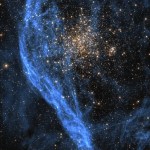
Hubble observations helped identify two types of "blue stragglers" in Messier 30.
Distance
27,500 light-years
Apparent Magnitude
7.7
constellation
Capricornus
object type
Globular Cluster
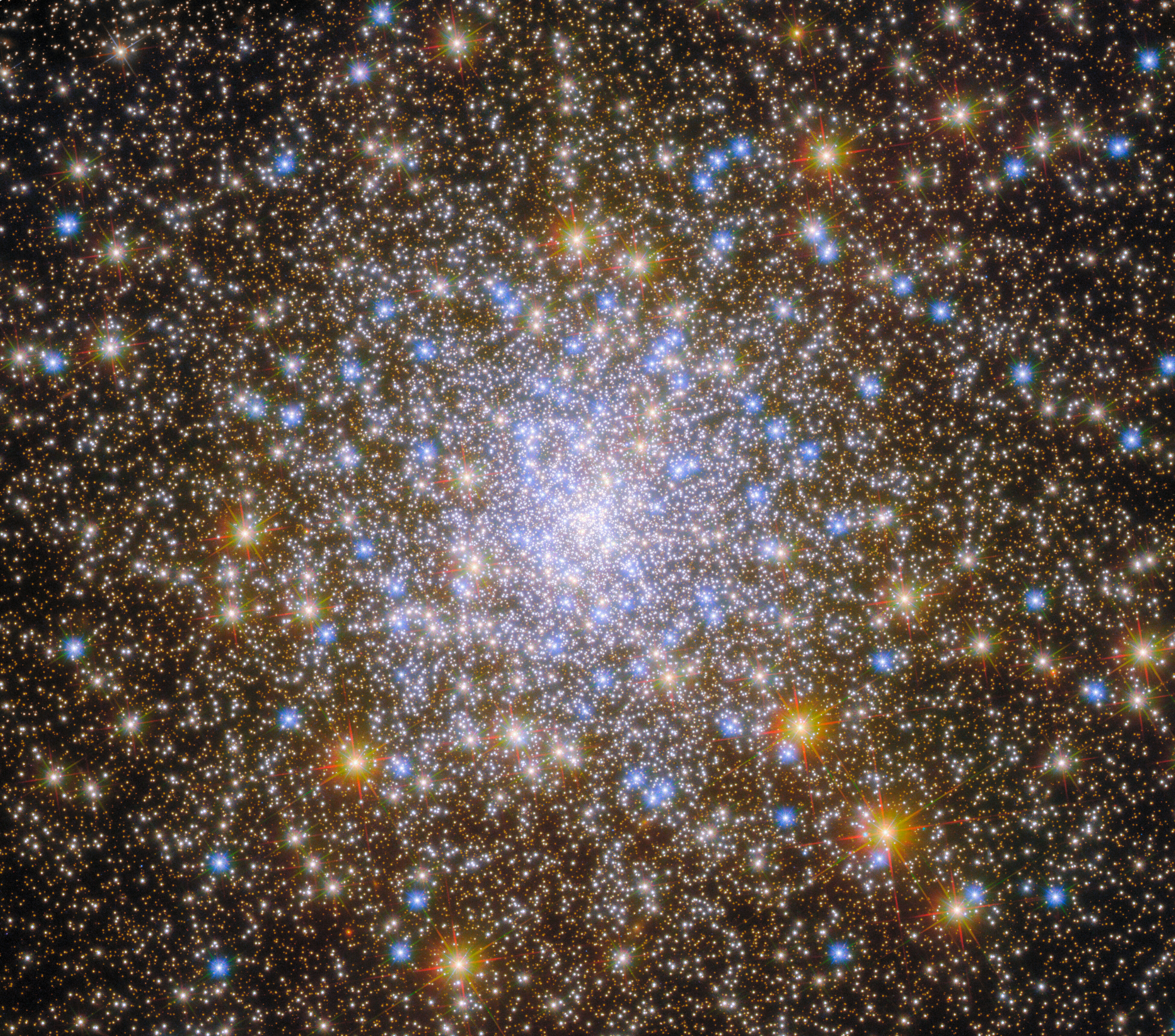
M30 is a globular cluster: a roughly spherical grouping of stars containing anywhere from tens of thousands to millions of stars. These clusters tend to live on the outskirts of galaxies, orbiting within a vast, diffuse region called the halo like a swarm of moths around a lightbulb. Our Milky Way galaxy has at least 150 globular clusters, the nearest of which is about 6,000 light-years away. These clusters are impressively ancient: astronomers estimate their ages are between 11.5 to 13.5 billion years, making certain globular clusters nearly as old as the universe itself.
Although globular clusters such as Messier 30 are mainly populated by old stars, the density of the stellar swarm leads to some old stars apparently reclaiming their youth as “blue stragglers.” Using observations from Hubble's now-retired Wide Field Planetary Camera 2 (WFPC2), astronomers identified two types of blue stragglers in M30: those that form in near head-on collisions between two stars, and those that are in binary systems where one star siphons "life-giving" hydrogen from its more massive companion.
M30, also called NGC 7099, was discovered by Charles Messier in 1764. It is located roughly 27,500 light-years from Earth in the constellation Capricornus. It has an apparent magnitude of 7.7 and can be seen through a pair of binoculars. M30 is best observed during October.
Amateur vs. Hubble Image
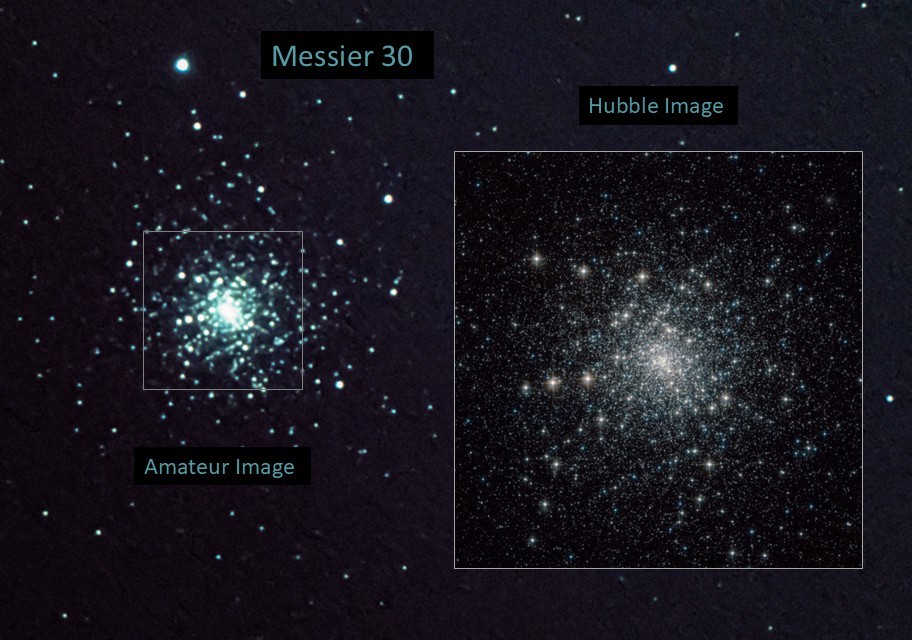

For more information about Hubble’s observations of M30, see:


Explore Hubble's Messier Catalog
The following pages contain some of Hubble’s best images of Messier objects.
Overview The Messier catalog, begun by astronomer Charles Messier in the 18th Century and revised over the years, includes some…

Better known as the Crab Nebula, Charles Messier originally mistook Messier 1 for Halley’s Comet, which inspired him to create…
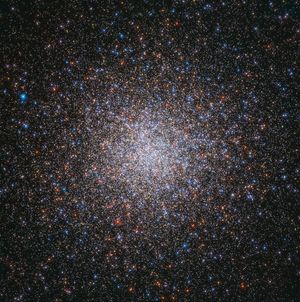
Hubble's image of Messier 2 is comprised of visible and infrared wavelengths of light.