




















CSDA Vendor - Vantor
NASA has acquired commercial datasets from Vantor (formerly Maxar) for scientific purposes.
Vantor, Inc. (formerly Maxar Intelligence) provides spatial intelligence products through its industry-leading imaging satellite constellation, 20-plus-year imagery archive, and global-scale 2D and 3D spatial foundation products. The Vantor constellation includes WorldView-1, WorldView-2, GeoEye-1, WorldView-3, and six WorldView Legion® satellites.
Obtaining Data
- To request access to CSDA-distributed data, complete the CSDA Authorization form. The CSDA team will verify if the user is authorized for data access.
- Search and download Vantor data using the CSDA Satellite Data Explorer (SDX). An Earthdata Login is required
- A large subset of Vantor data holdings are available for download using NASA Earthdata Search.
Copyright
Data products and derivatives for imagery must contain copyright markings as specified below, where YYYY is the year of the image acquisition.
For all instruments except WorldView-4 and IKONOS: ©YYYY Vantor, USG Plus
For IKONOS: ©YYYY Vantor, NextView
For Worldview-4:
- Data products: "©YYYY Vantor. All rights reserved."
- Derivatives: "Includes copyrighted material of Vantor, Inc. All rights reserved."
Note that users of Vantor data must obtain approval for release of Vantor to the public (publications, presentations, etc.) from the National Geospatial-Intelligence Agency (NGA). Please complete the Vantor Public Use Form before using the imagery in the public domain.
CSDA Acknowledgment
To help CSDA identify your publications, we request that you include the following acknowledgment when publishing work created using these data:
“This work utilized data made available through the NASA Commercial Satellite Data Acquisition (CSDA) Program.” Authorized users should send CSDA a courtesy copy of any publications that include CSDA-distributed data.
Evaluation
The Vantor Vivid™ Terrain (formerly Precision3D) DEM Product Quality Assessment Report is now available.
Documentation
- Ikonos® (Decommissioned) Datasheet
- GeoEye-1 Datasheet
- QuickBird (Decommissioned) Datasheet
- Worldview-1 Datasheet
- Worldview-2 Datasheet
- Worldview-3 Datasheet
- WorldView-4 (Decommissioned) Datasheet
- WorldView Legion® Datasheet
Research Using Vantor Data
Vantor CSDA Program Publications in Zotero (Formerly Maxar)
Vantor Commercial Data
View attributes and values for individual Vantor instruments.
| Sensor | WorldView-3 | WorldView-2 | WorldView-1 |
| Active Satellites | 1 | 1 | 1 |
| Orbit | Sun-Synchronous | Sun-Synchronous | Sun-Synchronous |
| Sensor Resolution | Panchromatic nadir: 0.31 m Multispectral nadir: 1.24 m | Panchromatic: 0.46 m GSD at nadir | 50 cm Ground Sample Distance (GSD) at nadir |
| Dynamic Range | 11-bits per pixel Pan and MS; 14-bits per pixel SWIR | 11-bits per pixel | 11-bits per pixel |
| Sensor bands | Panchromatic: 450–800 nm 8 Multispectral: Coastal: 397–454 nm Blue: 445–517 nm Blue: 445–517 nm Green: 507–586 nm Yellow: 580–629 nm Red: 626–696 nm Red Edge: 698–749 nm Near-IR1: 765–899 nm Near-IR2: 857–1039 nm 8 SWIR Bands: SWIR-1: 1184–1235 nm SWIR-2: 1546–1598 nm SWIR-3: 1636–1686 nm SWIR-4: 1702–1759 nm SWIR-5: 2137–2191 nm SWIR-6: 2174–2232 nm SWIR-7: 2228–2292 nm SWIR-8: 2285–2373 nm | Panchromatic: 450–800 nm 8 Multispectral: Coastal: 400–450 nm Blue: 450–510 nm Green: 510–580 nm Yellow: 585–625 nm Red: 630–690 nm Red Edge: 705–745 nm Near-IR1: 770–895 nm Near-IR2: 860–1040 nm | Panchromatic: 400–900 nm |
| Revisit Frequency | 1-4 days | 1-4 days | 1.7 days |
| Geolocation Accuracy | Predicted <3.5 m CE90 without ground control | Demonstrated <3.5 m CE90 without ground control | Demonstrated <4.0 m CE90 without ground control |
| Capacity | 680,000 sq km per day | 1 million sq km per day | 1.3 million sq km per day |
| WorldView Legion | WorldView-4 | |
| Active Satellites | 6 | No Active Satellites |
| Orbit | 2 Sun-Synchronous 4 Mid inclination orbit (MIO) | Sun-Synchronous |
| Sensor Resolution | Panchromatic nadir: 34 cm Multispectral nadir: 1.36 cm | Panchromatic Nadir: 0.31 m Multispectral Nadir: 1.24 m |
| Dynamic Range | 11-bits per pixel Pan and MS; 14-bits per pixel SWIR | 11-bits per pixel |
| Sensor bands | Panchromatic: 450 - 800 nm 8 Multispectral Coastal Blue: 400 - 450 nm Blue: 450 - 510 nm Green: 510 - 580 nm Yellow: 585 - 625 nm Red: 630 - 690 nm Red Edge1: 695 - 715 nm Red Edge2: 730 - 750 nm Near-IR: 770 - 895 nm | Panchromatic: 450–800 nm 4 Multispectral: Red: 655–690 nm Green: 510–580 nm Blue: 450–510 nm Near-IR: 780–920 nm |
| Revisit Frequency | Up to 15 times per day depending on location | 1-4 days |
| Geolocation Accuracy | <5 m CE90 without ground control points | Demonstrated <3.5 m CE90 without ground control |
| Sensor | QuickBird | Ikonos | WorldView-1 |
| Active Satellites | 0 | 0 | 1 |
| Orbit | Sun-Synchronous | Sun-Synchronous | Sun-Synchronous |
| Sensor Resolution | Panchromatic: 55 cm GSD at nadir | Panchromatic: 0.82 m Multispectral: 3.2 m | Panchromatic: 41 cm GSD |
| Dynamic Range | 11-bits per pixel Pan and MS; 14-bits per pixel SWIR | 11-bits per pixel | 11-bits per pixel |
| Sensor bands | Panchromatic: 55 cm GSD at nadir Black & White: 405 - 1053 nm Multispectral: 2.16 m GSD at nadir Blue: 430–545 nm Green: 466–620 nm Red: 590–710 nm Near-IR: 715–918 nm | VIS (0.40 - 0.75) µm, NIR (0.75 - 1.30) µm | Panchromatic: 41 cm GSD at nadir Black & White: 450 - 800 nm Multispectral: 1.65 m GSD at nadir Blue: 450–510 nm Green: 510–580 nm Red: 655–690 nm Near-IR: 780–920 nm |
| Revisit Frequency | N/A | N/A | 2.6 days |
| Geolocation Accuracy | 23 m CE90, 17 m LE90 (without ground control) | Demonstrated <3.5 m CE90 without ground control | 5 m CE90, 3 m CE90 (measured) |
Authorized Data Use and Users
Access to this data is governed by the CSDA End User License Agreements (EULAs). The minimum access level for data is the USG license. Depending on the specific data products provided, some or all data may also be available under higher-tier CSDA licenses, including USG‑Plus and Public licenses.
Under the applicable license tier, authorized users may include:
- U.S. Government federal employees
- State, local, territorial, and tribal government personnel
- U.S. Government contractors and subcontractors
- U.S. Government–funded researchers and academic partners
- Other users authorized under applicable CSDA license levels (USG, USG‑Plus, or Public)
All data use must comply with the terms of the EULA. All data requests must be reviewed and approved by NASA’s Commercial Satellite Data Acquisition (CSDA) program.
Learning Resources
For more information about the commercial data from Vantor (formerly Maxar) available through the CSDA program, see the Vantor NASA CSDA Vendor Focus webinar.
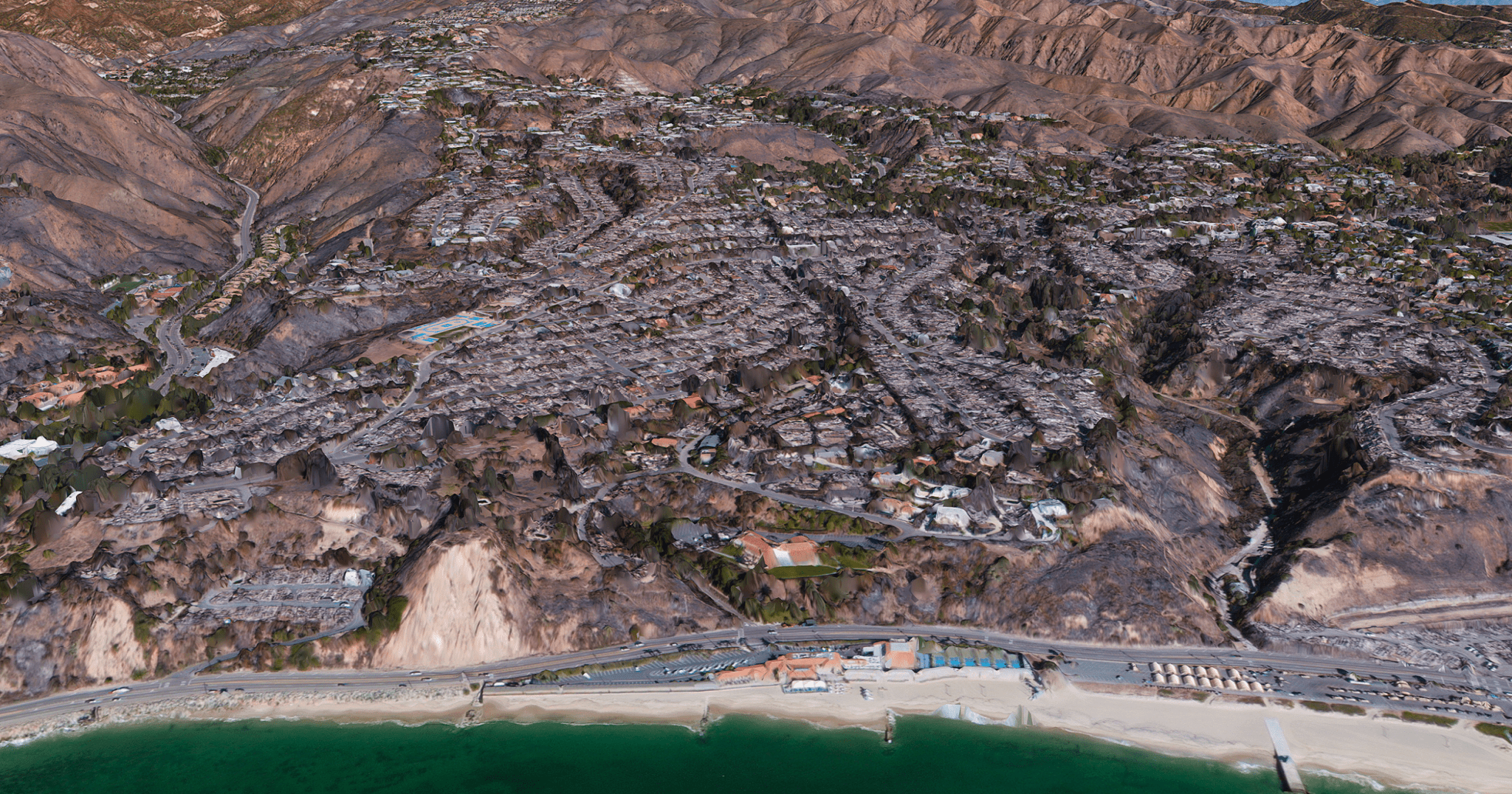
Top Banner Image: Vantor Vivid Terrain 3D image of a Los Angeles coastal neighborhood after the January 2025 wildfires, showing extensive structural damage and widespread burn scars reaching the shoreline. Credit: Satellite 3D image ©2026 Vantor